Read the wind first
Glance at the wind arrow before you aim. A long arrow pushing left means you should aim a little to the right of the ground you want.
Angler handbook
Notes collected from long mornings on the cabin lake. None of them change the rules — they simply help you read what the game is already telling you.
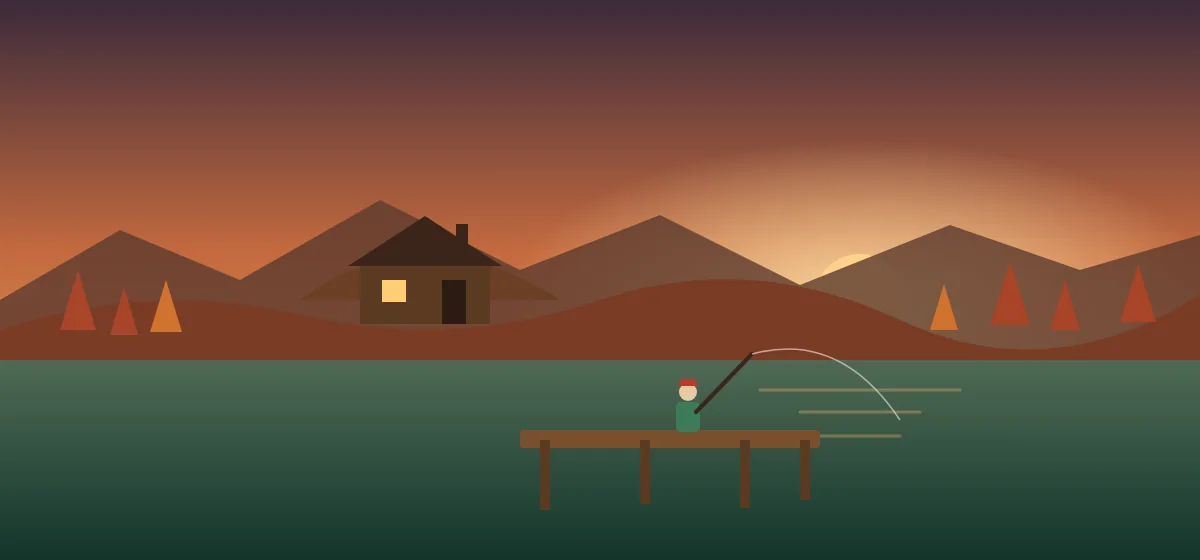
Glance at the wind arrow before you aim. A long arrow pushing left means you should aim a little to the right of the ground you want.
Watch two full sweeps of the power bar before casting. Once you sense its rhythm, release on the way up rather than at the very top.
Tap and hold in short bursts. If the needle passes the green band, let go until it drifts back — a snapped line costs the whole cast.
The large trophy hollow pays the most but its fish pull hardest. When casts are running low, a safe reed corner can be the smarter pick.
Every miss takes ten points. A shorter, accurate cast into a small ground beats an ambitious throw that lands in empty water.
Rushing the cast button is the most common mistake. Breathe, check the crosshair, then commit.
Each reward nudges your strategy in a different direction.
More casts mean you can afford to try the trophy hollow early and still recover.
With points already banked, a careful session protects your lead — avoid risky long throws.
The wind barely moves the float, so aim straight at the centre of the ground you want.
Use the slower meter to land long casts precisely on the far feeding grounds.
Bigger fish benefit most from the boost, so lean toward the trophy and deep grounds.
Your first miss is free — use it on a bold early cast to the furthest ground.